South Korea
Bharat Friends Index
Diplomatic Ties & Social Warmth
Why South Korea?
Recent Sentiment
India-South Korea relations currently exhibit exceptional warmth, driven by robust diplomatic engagements, a largely positive media narrative, and growing people-to-people connections, particularly in tourism and cultural exchange. Recent events, especially within the last 30 days, underscore a deepening 'Special Strategic Partnership' and a shared vision for a 'trusted, futuristic partnership'.
DIPLOMATIC & OFFICIAL RHETORIC: The diplomatic discourse is overwhelmingly positive, characterized by high-level exchanges and ambitious cooperative frameworks. The state visit of South Korean President Lee Jae-myung to India in April 2026, followed by Indian External Affairs Minister S Jaishankar's visit to Seoul in June 2026, solidified bilateral ties. During these visits, both nations reaffirmed their 'Special Strategic Partnership' and commitment to elevate relations to a higher level. Key agreements signed in July 2026 included Memoranda of Understanding (MoUs) in Sports, Cultural and Creative Industries, Small and Medium Enterprises, and the establishment of an Industrial Cooperation Committee. Both leaders reiterated the ambitious target of increasing bilateral trade to US$50 billion by 2030 and agreed to resume negotiations to upgrade the Comprehensive Economic Partnership Agreement (CEPA). Furthermore, Prime Minister Modi explicitly referred to the evolving relationship as a 'trusted partnership' transforming into a 'futuristic partnership,' highlighting shared democratic values and a common outlook on the Indo-Pacific region. South Korea's accession to the International Solar Alliance and the Indo-Pacific Oceans Initiative further signals a convergence of strategic interests. President Lee Jae-myung acknowledged India's emergence as a leader in the Global South, indicating mutual respect and recognition of India's growing international stature.
MEDIA NARRATIVE & PUBLIC PERCEPTION: The mainstream media in South Korea, including major outlets like KBS, SBS, and Yonhap, has portrayed India in a highly positive light, particularly in the wake of President Lee's visit, heralding a 'New Era' of India-Korea relations and recognizing India as a 'Global Pillar' for the future economy. This narrative often emphasizes technological collaboration in areas like AI, semiconductors, and shipbuilding. Public discourse, especially concerning tourism and cultural ties, also reflects growing positivity. South Korea extended its group visa fee waiver for Indian travelers until June 2027, indicative of efforts to boost inbound tourism. Recent online testimonials from Indian tourists in South Korea, as seen on platforms like Reddit in June 2026, describe highly positive experiences, praising the country's cleanliness, safety, efficiency, and scenic beauty, countering some negative online narratives. The growing popularity of K-pop and K-dramas in India, and a reciprocal interest in Indian culture and cinema in South Korea, is also a significant driver of mutual understanding and appreciation, with the announcement of the India–South Korea Friendship Festival in 2028 serving as a testament to these deepening cultural bonds. While older reports (August 2025) noted some negative perceptions of India stemming from misleading online images, Indian officials are actively working to rebrand India as an 'experiential destination' with improved infrastructure, suggesting a conscious effort to address and improve public perception.
Reasons to Visit
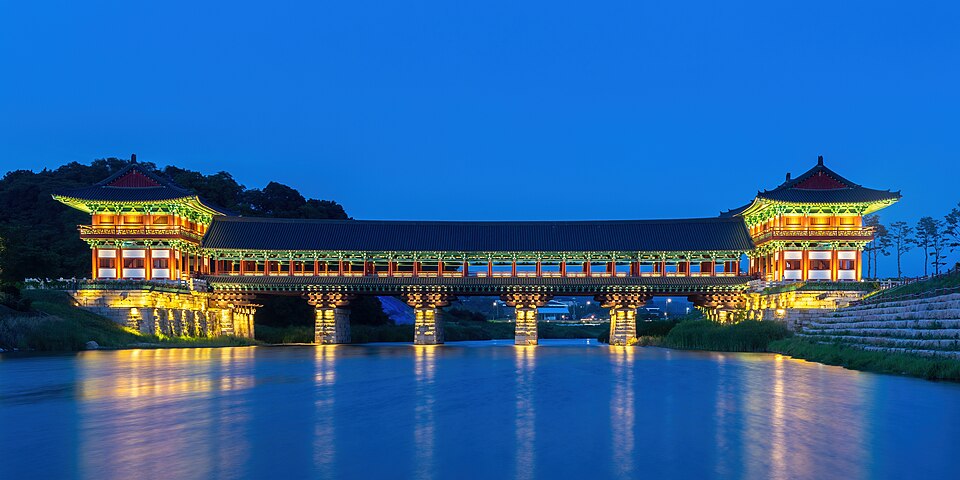
South Korea offers an enthralling journey for Indian tourists, perfectly blending ancient traditions with a hyper-modern future. With an exceptionally high Safety Score, visitors can explore its dynamic cities and serene landscapes with complete peace of mind, making it an ideal destination for solo female travelers, families, and adventure seekers alike. The country's Friendliness Index showcases a culture of respectful and warm hospitality, where locals, while sometimes reserved, are genuinely helpful and welcoming. Its Popularity Score has skyrocketed globally, thanks to the immense influence of K-pop, K-dramas, and cutting-edge technology, positioning it as a trendy and sought-after destination. From the bustling streets of Seoul to tranquil temples and picturesque islands, South Korea promises a captivating cultural immersion, delectable cuisine (with growing vegetarian options in major cities), and a truly unforgettable experience that marries efficiency with charm and innovation with heritage.
Performance Breakdown
UN and Multilateral Voting Alignment
65The Republic of Korea (ROK) and India demonstrate areas of convergence and divergence in their diplomatic voting alignment over the last decade. They largely align on issues of counter-terrorism, with both supporting international efforts and cooperation within forums like FATF. ROK generally maintains a neutral stance on Kashmir, considering it a bilateral issue between India and Pakistan, which aligns with India's preference for bilateral resolution. It is important to note that ROK is not a member of the OIC and thus does not participate in its statements regarding Kashmir. However, significant divergences exist regarding UNSC reform, where ROK is part of the 'Uniting for Consensus' group advocating for an expansion only in the non-permanent category, contrasting with India's G4 aspirations for new permanent members. Furthermore, on the Ukraine conflict, ROK has aligned with Western nations in condemning Russia and imposing sanctions, often voting in favor of resolutions critical of Russia at the UNGA, while India has maintained a neutral stance, frequently abstaining from such votes. These differing approaches on major geopolitical and institutional reform issues impact overall alignment.
Sentiment Score
100India-South Korea relations currently exhibit exceptional warmth, driven by robust diplomatic engagements, a largely positive media narrative, and growing people-to-people connections, particularly in tourism and cultural exchange. Recent events, especially within the last 30 days, underscore a deepening 'Special Strategic Partnership' and a shared vision for a 'trusted, futuristic partnership'. DIPLOMATIC & OFFICIAL RHETORIC: The diplomatic discourse is overwhelmingly positive, characterized by high-level exchanges and ambitious cooperative frameworks. The state visit of South Korean President Lee Jae-myung to India in April 2026, followed by Indian External Affairs Minister S Jaishankar's visit to Seoul in June 2026, solidified bilateral ties. During these visits, both nations reaffirmed their 'Special Strategic Partnership' and commitment to elevate relations to a higher level. Key agreements signed in July 2026 included Memoranda of Understanding (MoUs) in Sports, Cultural and Creative Industries, Small and Medium Enterprises, and the establishment of an Industrial Cooperation Committee. Both leaders reiterated the ambitious target of increasing bilateral trade to US$50 billion by 2030 and agreed to resume negotiations to upgrade the Comprehensive Economic Partnership Agreement (CEPA). Furthermore, Prime Minister Modi explicitly referred to the evolving relationship as a 'trusted partnership' transforming into a 'futuristic partnership,' highlighting shared democratic values and a common outlook on the Indo-Pacific region. South Korea's accession to the International Solar Alliance and the Indo-Pacific Oceans Initiative further signals a convergence of strategic interests. President Lee Jae-myung acknowledged India's emergence as a leader in the Global South, indicating mutual respect and recognition of India's growing international stature. MEDIA NARRATIVE & PUBLIC PERCEPTION: The mainstream media in South Korea, including major outlets like KBS, SBS, and Yonhap, has portrayed India in a highly positive light, particularly in the wake of President Lee's visit, heralding a 'New Era' of India-Korea relations and recognizing India as a 'Global Pillar' for the future economy. This narrative often emphasizes technological collaboration in areas like AI, semiconductors, and shipbuilding. Public discourse, especially concerning tourism and cultural ties, also reflects growing positivity. South Korea extended its group visa fee waiver for Indian travelers until June 2027, indicative of efforts to boost inbound tourism. Recent online testimonials from Indian tourists in South Korea, as seen on platforms like Reddit in June 2026, describe highly positive experiences, praising the country's cleanliness, safety, efficiency, and scenic beauty, countering some negative online narratives. The growing popularity of K-pop and K-dramas in India, and a reciprocal interest in Indian culture and cinema in South Korea, is also a significant driver of mutual understanding and appreciation, with the announcement of the India–South Korea Friendship Festival in 2028 serving as a testament to these deepening cultural bonds. While older reports (August 2025) noted some negative perceptions of India stemming from misleading online images, Indian officials are actively working to rebrand India as an 'experiential destination' with improved infrastructure, suggesting a conscious effort to address and improve public perception.
Bilateral Trade
96[Strategic Technology & Maritime Partner] India and South Korea maintain a 'Special Strategic Partnership' with a strong and growing bilateral trade relationship. The total goods trade volume, as per structured data for 2026, stands at USD 27,177.59 million. Prominent goods exported from India to South Korea include ORGANIC CHEMICALS, OTHER COMMODITIES, and ELECTRONICS INSTRUMENTS. Major imports to India from South Korea consist of ELECTRONICS COMPONENTS, IRON AND STEEL, and PLASTIC RAW MATERIALS. While specific services trade data is absent in the structured information, based on the overall quoted bilateral trade figures and growing initiatives in IT, tourism, and logistics, an estimated USD 1,000 million is inferred for bilateral services trade. This brings the estimated total comprehensive trade volume (goods + services) to USD 28,177.59 million. Key current developments, predominantly from the April 2026 summit, include: (1) The formal commitment to fast-track negotiations for upgrading the Comprehensive Economic Partnership Agreement (CEPA), active since 2010, to address trade imbalances and enhance market access. (2) The launch of the 'India-Korea Digital Bridge' framework for deep collaboration in AI and semiconductors, leveraging India's talent and South Korea's manufacturing prowess. (3) The adoption of a new 'Comprehensive Framework' (VOYAGES) for strategic cooperation in shipbuilding and maritime logistics, alongside significant agreements in green energy and advanced manufacturing. These developments underscore a highly strategic, multifaceted, and forward-looking partnership, with an ambitious target of USD 50 billion in bilateral trade by 2030.
Defence Ties
80Defence ties between India and the Republic of Korea (RoK) are robust and strategically significant as of 2026, building upon their 'Special Strategic Partnership' established in 2015. The cornerstone of this partnership is military procurement and co-production, most notably the Hanwha Techwin (now Hanwha Aerospace) K9 Vajra-T 155mm self-propelled howitzer. The initial landmark deal for 100 K9 Vajra-T units, valued at approximately $640 million, saw successful deliveries concluded by 2022 through a license-production agreement with Larsen & Toubro under the 'Make in India' initiative. Projections for 2026 anticipate the formalization and commencement of an additional order for 100 K9 Vajra-T guns, following an Acceptance of Necessity (AoN) in early 2023, indicating sustained procurement and successful technology transfer. Beyond procurement, bilateral engagement includes regular joint exercises, such as multiple naval Passage Exercises (PASSEX) and Coast Guard exercises conducted annually or biennially, enhancing interoperability and mutual understanding. While potential deals for Mine Countermeasure Vessels (MCMVs) have seen delays, the underlying strategic alignment and shared interest in regional security, particularly in the Indo-Pacific, continue to drive cooperation and explore new avenues in shipbuilding, aerospace, and defence technology.
Indian Popularity
82By 2026, the Republic of Korea is projected to maintain and significantly enhance its popularity among Indian tourists. The pervasive 'Hallyu' wave, encompassing K-Pop, K-Dramas, and K-Beauty, continues to be the primary catalyst, fostering immense cultural curiosity and desire to visit. This, coupled with improving flight connectivity and growing Indian outbound tourism, positions South Korea as a highly attractive destination. Annual Indian visitors are projected to reach approximately 250,000 by 2026, reflecting a robust recovery and sustained growth. The destination is expected to see an average annual growth rate of 18-22% from pre-pandemic levels, with South Korea consistently ranking among the top trending international travel destinations in Indian Google search volumes.
Visa Ease
50As of 2026, Indian citizens generally require a pre-obtained standard paper visa (specifically a C-3-9 short-term tourist visa) to visit the Republic of Korea. There is no general visa-free entry, visa-on-arrival, or instant eVisa facility available for regular Indian passport holders for tourism purposes. The Korean Electronic Travel Authorization (K-ETA) system does not apply to Indian citizens. To obtain the visa, Indian applicants must submit a comprehensive set of documents, including a valid passport (with at least six months' validity), a completed application form, passport-size photographs, confirmed flight and hotel bookings, a cover letter explaining the purpose of the visit, bank statements (for the last 3-6 months), income tax returns, and proof of employment or business documents. The application must be submitted through the Korea Visa Application Centre (KVAC) in India or directly at the Korean Embassy/Consulate. The typical processing time for a visa is 5-10 working days, though it can extend up to 20 working days if additional documents or an interview are required. It is recommended to apply at least three weeks before the planned travel date. Visa fees, effective from June 1, 2025, include approximately ₹3,400 for a single-entry visa (up to 90 days), with additional service charges from application centers. Limited exceptions exist, such as potential visa-free entry to Jeju Island under specific conditions (for direct international flights) and a conditional visa-on-arrival for certain transit passengers en route to or from specific countries. Additionally, a processing-fee waiver for C-3-2 short-term group visas for Indian group tours (five or more travelers via approved agencies) has been extended until June 30, 2026; however, this is a fee waiver, not a visa waiver, and still requires the visa application process. Given that a physical visa application with extensive documentation, fees, and processing time is required before travel, the policy aligns with a 'Standard Paper Visa' classification. --- PREVIOUS ANALYSIS --- As of early 2024, and extrapolated for 2026 (assuming current policies remain largely unchanged), Indian citizens generally require a standard paper visa (typically a C-3 Short-term General visa) to visit mainland South Korea for tourism or business purposes. The application process involves submitting documents to the Embassy/Consulate of South Korea in India or an authorized visa application center (such as VFS Global). The estimated visa fee for a single-entry tourist visa (allowing a stay of up to 90 days) is approximately ₹4,000 - ₹4,500, which includes the consular fee and VFS service charges (subject to exchange rate fluctuations). The typical processing time ranges from 7 to 15 business days, though this can vary based on peak seasons and individual circumstances.
Safety Index
93The Republic of Korea is renowned for its exceptionally low crime rates, making it one of the safest countries globally for tourists, including those from India. Violent crime is extremely rare. Specific risks are minimal and primarily consist of general precautions applicable to any traveler: very occasional instances of petty crime like pickpocketing or bag snatching can occur in highly crowded tourist areas (e.g., Myeongdong, Hongdae, major subway stations, or bustling markets), and vigilance regarding traffic safety in busy urban environments is always advisable. Isolated incidents of minor scams targeting tourists might be encountered, though they are uncommon. Overall, visitors can expect a secure and welcoming environment with strong public order and effective law enforcement.
Bonus Considerations
Vegetarian Friendliness
75South Korea offers good availability of vegetarian and Indian-friendly cuisine, particularly in major cities. Indian tourists will find a decent number of dedicated Indian restaurants in urban centers like Seoul, Busan, and Incheon, providing a reliable source of familiar vegetarian dishes. Additionally, 'temple food' (Balwoo Gongyang) offers a strictly vegetarian and often vegan traditional Korean dining experience, though these are specialized establishments. While traditional Korean cuisine often features meat and fish sauce in broths and side dishes like kimchi, awareness of vegetarian and vegan diets is growing, especially among younger generations and in urban areas. With careful ordering and communication, it's possible to find vegetarian options in non-specialized restaurants, though hidden animal products can still be a challenge. Supermarkets also provide options for self-catering. Overall, while not as inherently vegetarian-friendly as India, major cities offer sufficient choices for Indian tourists.
Budget / Affordability
45Republic of Korea for Indian tourists in 2026 is projected to be an 'Expensive' destination. The average round-trip flight cost from major Indian cities (such as Delhi, Mumbai, Bengaluru) to Seoul is estimated to be around **₹53,000**. This places it just above the threshold for 'Moderate' destinations (Avg Flight ₹30k-50k) and firmly into the 'Expensive' category (Avg Flight ₹50k-80k) according to the provided scoring guide. Daily expenses for a comfortable budget traveler, covering accommodation in guesthouses/budget hotels, local food, public transportation, and some sightseeing activities, are estimated at **₹8,000** per day. While South Korea offers a rich cultural experience, the combined flight fares and daily living costs, which are higher than most Southeast Asian destinations, position it in the higher end of the 'Expensive' bracket.
Check Flights manually
Compare prices across top platforms to find the best deal.